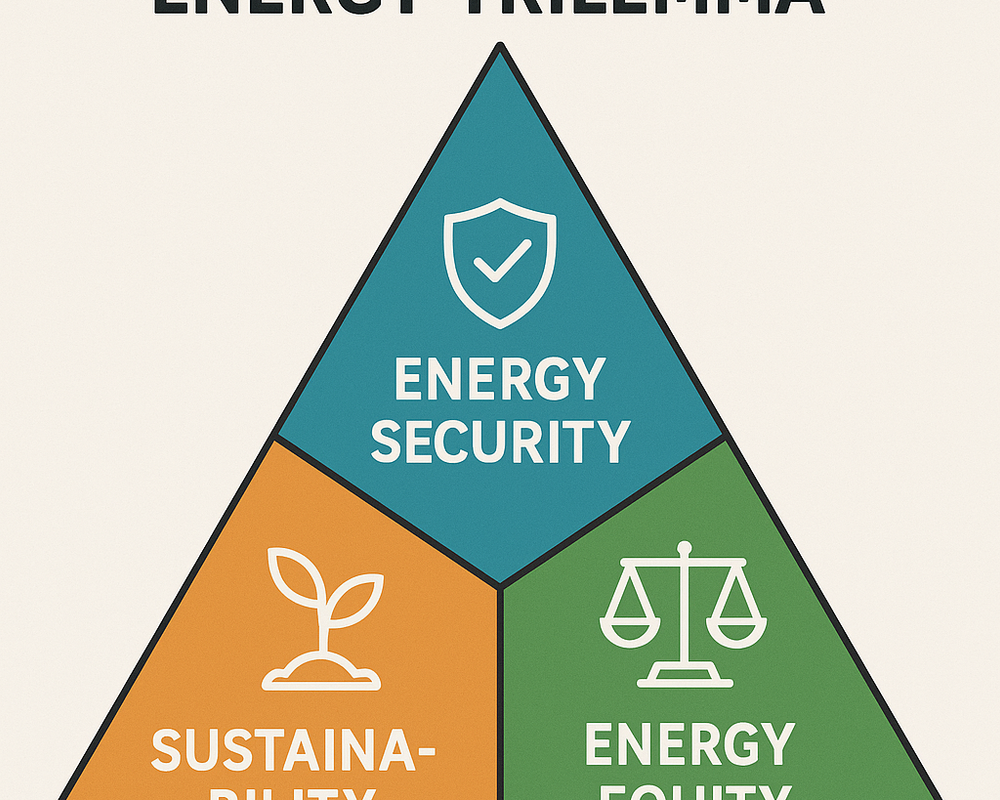
The Energy Trilemma - the puzzle for the future of energy
Global energy demand is on the rise. But as we face the impacts of climate change, sustainability has moved to the forefront more than ever before. As a result, there’s an international consensus around the need to take prompt action towards net-zero/decarbonization—and at the top of the list of how to do so is finding an answer to equitable, sustainable, and secure path forward for future of energy.
Enter the Energy Trilemma. Simply put, the Energy Trilemma describes the balance between energy security, social impact, and sustainability. More specifically, a term coined by the World Energy Council, the World Energy Trilemma Index is formulated annually and ranks the energy performance of 128 countries across the three dimensions: energy security, energy equity, and environmental sustainability, based on both international and national data. In so doing, the Index provides a means of investigating trends, celebrating positive performance, examining opportunities for improvement and any associated challenges, and encouraging dialogue on energy policies as we look towards the future.
The puzzle power professionals collectively trying to solve is making sure our energy systems are sound—meaning secure, equitable, and environmentally sustainable—while recognizing the rapid transition we’re in to decarbonize. So, what’s the path forward? How can grid transformation help? First, it’s important to understand the three dimensions. Let’s break it down:
Energy security: This is a country’s capacity to meet present and future energy demands across the country with reliable networks. It also measures the resilience of energy infrastructure. Think of an extreme weather event: how do we bounce back as quickly as possible with as minimal disruption as possible?
Energy equity: This is a country’s ability and capacity to provide universal access to power (domestic and commercial). It has to be affordable, priced fairly, and available for consumption.
Environmental sustainability: This marks the conversion of a nation’s energy to cleaner power sources that can help mitigate the impacts of climate change. The main points of consideration in this dimension are generation, transmission and distribution, and decarbonization.
Adopting to power engineering professional skills at higher proficiency in advanced technologies through co-innovation and collaboration is the key. stay tuned to learn more on similar topics.